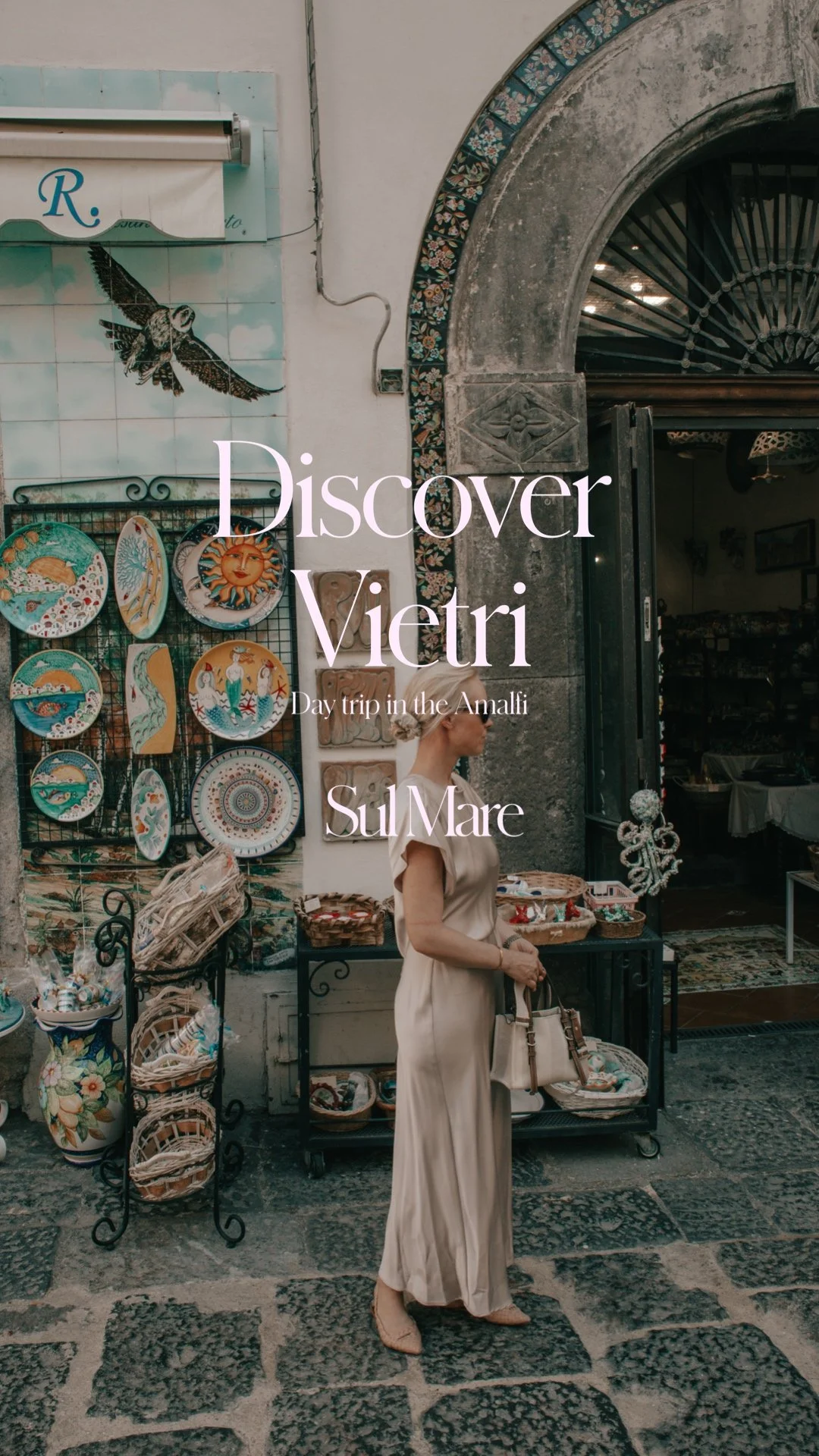
Vietri Sul mare, Amalfi Coast


Tucked at the eastern gateway of Italy’s celebrated Amalfi Coast lies the charming seaside town of Vietri sul Mare — a destination that marries artisan tradition, beach-life and coastal views in a way that feels both vibrant and authentic. We took the boat from Cetara to Vietri Sul Mare, for some lunch and a little stroll to see the ceramics.
Vietri sul Mare is often called the “first pearl” of the Amalfi Coast, partly because it lies where the dramatic coastline begins as you travel from the city of Salerno. It’s less frenetic than some of the more famous towns further west, which gives it a more relaxed rhythm without sacrificing charm.
Ceramic heritage – The town is world-famous for its colourful hand-painted majolica pottery and tiles. The ceramic tradition here stretches back centuries.
Beach and sea – With some of the widest beaches on this stretch of coast and good access from Salerno, Vietri is a very viable seaside stop.
Architecture & history – A key landmark is the church of San Giovanni Battista (Vietri sul Mare) with its striking domed roof in glazed ceramics. And historically, the town has roots reaching back to ancient times, linked with the early settlement of the region.
Things to do
Wander the historic centre: Lose yourself in the narrow streets of the old town, browse ceramic-workshops and small boutiques, soak up the local atmosphere.
Visit the ceramics museum: The Museo della Ceramica (Vietri sul Mare) is located in beautiful Villa Guariglia in the hamlet of Raito and showcases the rich ceramic history of the town and region.
Church with a view: The Church of San Giovanni Battista dominates visually with its ornate glazed dome, and inside you’ll find Baroque altars and works of art.
Beach time: Head down to the marina or the main beach area (Spiaggia di Marina di Vietri) for swimming, sunbathing or simply a seaside stroll.
Panoramic walk: The Villa Comunale (public gardens) offers a lovely spot for a sunset view over the sea, decorated with ceramic tiles and benches.
Why it stands out
Vietri sul Mare blends coast, craft and calm. It may not have the vertical drop of Positano’s cliff-houses, or the grandeur of Amalfi’s cathedral square, but its strengths are different: accessibility, authenticity, and a distinctive craft identity (those bold majolica ceramics). It’s often overlooked by visitors who head straight for the glitzier names — which means you might find a little more breathing room here.
Suggested one-day itinerary
Morning: Arrive and stroll through the historic centre. Visit the church of San Giovanni Battista, browse workshops of ceramics.
Lunch: Seaside restaurant on the marina—fresh fish and salad, sit back and watch the sea.
Afternoon: Walk up to the Villa Comunale gardens for panoramic views, then head to the beach for a dip or a rest.
Late afternoon: Visit the ceramics museum in Raito (if you have time), or simply explore more streets and do a bit of shopping.
Evening: Sunset drink overlooking the Gulf of Salerno, dinner in town, relaxed pace.


2 nights in Amalfi


A Citrus-Scented Dream on the Coast
After three tranquil nights in the sleepy fishing village of Cetara, just twenty minutes away, we were ready for a change of pace. Amalfi, one of the most iconic gems of the Amalfi Coast, greeted us with a flurry of energy — the chatter of travelers, the glint of sunlight on the sea, and the sweet scent of lemons drifting through the air. We knew it would be busy, but coming from Cetara’s quiet charm, we welcomed the liveliness. And as evening descended and the day-trippers melted away, the town revealed a more intimate side — lanterns twinkling, the sound of the waves softening the streets, and locals reclaiming their piazza.


View of Amalfi harbour on our walk to Atrani, the neighbouring town
Staying in the Heart of It All
Our stay at La Casa del Duca, a lovely Airbnb perched right above the family-run restaurant La Taverna del Duca, placed us at the very heart of Amalfi. From our balcony, we could watch the rhythm of the town unfold below — scooters whizzing past, the hum of conversation, and the golden light bouncing off the pastel façades. From here, it was also an easy and scenic 10-minute walk to the neighboring village of Atrani, which we did one afternoon — a charming stroll along the coast that offers quieter streets and stunning sea views.
Dining downstairs at La Taverna del Duca felt like joining a local secret. The food was exquisite — honest, deeply flavorful, and made with unmistakable pride. For anyone visiting Amalfi, this is a place that deserves a spot on your list.


Where the Sea Meets the Table
Another culinary highlight was Marina Grande, set right on the water. With the sea lapping just steps away, we indulged in a seafood feast that was nothing short of heavenly — creamy seafood risotto, sea urchin spaghetti layered over tuna tartare, and a perfectly balanced spaghetti alle vongole that delighted our three-year-old (and became his go-to dish for the rest of the trip).


The Soul of Amalfi
Amalfi’s beating heart is its central Piazza del Duomo, dominated by the stunning Cathedral of Saint Andrew (Duomo di Amalfi). Climbing the grand staircase to its doors feels like stepping into another era. Inside, the mosaic details, the bronze doors from Constantinople, and the peaceful cloister transport you to a time when Amalfi was a powerful maritime republic.
Between sightseeing and strolling, we couldn’t resist the famous lemon sorbets served in frozen lemon shells — refreshing, zesty, and perfectly balanced. We went back twice, and honestly, we could have gone a third time.


A Taste of Lemon Paradise
One of the most memorable experiences of our trip was a spontaneous lemon farm tour — a window into the soul of Amalfi’s heritage. The farm sits just above town, accessible by a steady uphill walk (note: bring comfortable shoes (I did not) and a bit of stamina — my husband ended up carrying our three-year-old part of the way!).
Led by a local family, the guided tour took us through terraced lemon groves perched dramatically on the cliffs. We learned how generations have tended to these precious Sfusato Amalfitano lemons, which thrive in this microclimate. A fun fact: mice are one of the farmers’ biggest threats, capable of wiping out entire crops.
The experience ended on a delicious note — fresh lemon juice, moist lemon cake, and a potent but smooth homemade limoncello. It was a sensory celebration of Amalfi’s essence. While tickets often sell out in advance, we were lucky to snag last-minute spots by walking up and inquiring directly.
Family Moments by the Sea
Traveling with a little one, we discovered a lovely playground tucked away from the bustle, conveniently connected to a quiet beach. It became a small oasis for families — a place where kids could run free while parents enjoyed a moment of calm against the sea backdrop.
For those seeking adventure, Amalfi offers private boat rentals that let you explore hidden coves and grottoes along the coast. Prices are generally reasonable, and the views of the cliffs from the water are unforgettable. Unfortunately, our plans were dashed by strong waves and an approaching storm that evening — but even watching the storm roll in from our balcony felt cinematic.
Taking Amalfi Home
Before leaving, we stopped by a local limoncello distillery right in the center of town, where the spirit is crafted on-site. We brought home a few bottles — not just as souvenirs, but as reminders of the sunshine, sweetness, and vibrancy that define Amalfi.


What Else to See and Do in Amalfi
While many visitors come for a day, staying overnight lets you experience the town’s quieter charm. In addition to the Duomo and lemon tours, you might also:
Visit the Museum of Paper (Museo della Carta) to learn about Amalfi’s ancient paper-making tradition.
Hike the Valle delle Ferriere, a lush nature reserve filled with waterfalls and rare plants.
Take a ferry to Positano or Capri or some smaller less known towns for easy day trips.
Wander through Piazza dei Dogi and the nearby alleys for boutique shopping and gelato.
Walk to Atrani, the neighbouring town in 10minutes. There is a cute lunch spot in between the towns on th edge of the cliff called Ristorantte Da Zaccaria.
Enjoy a negroni & antipasti overlooking the sea before dinner time
buy & taste limoncello at Antichi Sapori d ´Amalfi, a store and a place where they also make limoncello.


Amalfi is more than its postcard perfection — it’s a town of layers. Beneath the crowds and souvenir shops, you’ll find stories of families, centuries of craftsmanship, and the unshakable spirit of a coastal community that has thrived for generations. Whether you’re sipping limoncello, listening to church bells, or watching the sea change color at sunset, Amalfi reminds you to slow down and savor life’s sweetness — much like its famous lemons.


The fishing village, Cetara, Amalfi coast


Amalfi Coast’s Hidden Gem
When most travelers dream of the Amalfi Coast, names like Positano, Amalfi, and Ravello spring to mind—places dazzling with cliffside villas, bustling piazzas, and endless Instagrammable views. But if you’re craving a quieter, more authentic experience, let me introduce you to Cetera, a charming fishing village that feels like a secret tucked between the iconic coastal towns.
A Peaceful, Family-Friendly Base
Cetera offers the perfect balance of tranquility and accessibility. Unlike its more famous neighbors, this small town remains delightfully under the radar, making it an ideal base for a three-night family stay. The village is family-friendly, with a sweet playground right by the harbor—a spot we happily visited every evening before dinner. Parents can relax while kids run around safely, soaking in the views of the sparkling sea. The town had a cozy beach, not crowded and everything was very inviting.
One of Cetera’s most captivating features is its fishing harbor, which feels entirely authentic and lived-in. Early in the morning, as the sun rises slowly over the coast, the harbor comes alive with the hum of daily life. A radio blasts through speakers perched on lamp posts, playing tunes for fishermen as they clean the fresh catch of the day. You can watch them at work and witness the very seafood the town is known for, bringing a real sense of connection to the local culture and traditions.
Parking is worry-free, too: there’s a large paid parking area on top of the hill, where it was completely safe to leave the car while we explored on foot.
We stayed in a cosy Airbnb called Casa Galano, right on the main square. With a balcony overlooking the main road with all the restaurants and just a stone’s throw from the harbour, it was the perfect little home base to soak up the local atmosphere.


Exploring the Surroundings
From Cetera, you can easily explore the Amalfi Coast without the crowds. Here’s a suggested three-day itinerary:
Day 1: Slow Coastal Strolls
Wake up to the calm sound of the Mediterranean waves and enjoy a relaxed breakfast on your balcony. Spend your morning wandering Cetera’s streets, taking in the traditional architecture, and snapping photos of the quaint harbor. In the afternoon, a short drive or ferry ride brings you to Amalfi for a dose of history—don’t miss the striking Duomo di Amalfi and the quaint backstreets lined with artisan shops.
Day 2: Hidden Beaches and Scenic Views
One of Cetera’s perks is easy access to quieter beaches. Head to Fiordo di Furore, a hidden cove tucked between cliffs, perfect for swimming or simply soaking up the sun. Later, drive up to Ravello to stroll through lush gardens and enjoy panoramic views of the coastline that rival any postcard scene.
Day 3: Local Flavors and Day Trips
Dedicate your last day to exploring smaller villages and savouring local cuisine. Stop in Minori or Maiori for fresh seafood pasta, or visit Vietri sul Mare, famous for its colorful ceramics. Back in Cetera, enjoy a leisurely evening at a family-run trattoria, and then finish the day with a final visit to the harbor playground—the kids will thank you!


Why Cetera Stands Out
What makes Cetera truly special is its peaceful authenticity and family-friendly charm. You’re close enough to Amalfi’s glamour but far enough from the tourist throngs to enjoy real Italian life—friendly neighbors, local markets, and stunning, unspoiled scenery. Staying here feels like discovering a private corner of the Amalfi Coast that very few travelers get to see.
Tips for Staying in Cetera
Accommodation: Casa Galano is ideal due to location, but there are other small guesthouses and boutique B&Bs perched on the cliffs for panoramic views.
Transport: Renting a car is ideal to explore surrounding towns at your own pace. The hilltop paid parking is secure and convenient. Use the ferrys to visit nearby coastal towns. It leaves right from the harbour and the distances are short to other towns.
Family Fun: The harbor playground and the beach is a must for kids.
Timing: Sunrise or sunset in Cetera is magical; the village is bathed in soft golden light, perfect for photography or quiet reflection.
If the Amalfi Coast is a treasure chest, Cetera is the hidden jewel inside it. Three nights here will leave you with memories of calm mornings, stunning vistas, family fun, and a taste of authentic Italian coastal life.

Have a look at other beautiful towns we discovered on our Amalfi trip and discover our entire road trip route from here.

view from the boat that takes you to different towns. This is the view coming into Cetara.


Cetera is famously known for its anchovies, celebrated across Italy for their exceptional quality and rich flavor, still prepared today using traditional methods passed down through generations.

Beautiful Small towns on the Amalfi coast


Beyond the Postcards:
Discovering the Gentle Towns of the Amalfi Coast
The Amalfi Coast has long been a dream — a coastline of impossible beauty, where cliffs plunge into turquoise water and pastel towns cling to the rocks like blossoms in the sun. Yet behind the fame of Positano’s glamour and Ravello’s romance lies another coast entirely — one softer, slower, and infinitely more human.
It’s in the smaller towns, the ones often passed by on the way to somewhere else, that the true rhythm of Amalfi life still beats. These are places where fishermen still mend their nets by the harbor, where the scent of lemons mingles with espresso in the morning air, and where evenings end with locals gathering in the square as the sea glows gold beneath the fading sun.
From Cetara’s quiet authenticity to Minori’s sweetness and Maiori’s generous beachside charm; from the colorful ceramics of Vietri sul Mare to the secret calm of Atrani, just a short walk from bustling Amalfi — each of these towns tells a smaller, truer story of the coast. Together, they reveal the Amalfi as it once was, and still is, if you know where to look.
Here, the pace slows. Meals stretch into conversations. Beauty isn’t found in grand gestures but in the details — the glint of light on the water, the hum of a boat in the distance, the taste of lemons warmed by the afternoon sun.
This is the gentler Amalfi Coast — the one that invites you to linger, to listen, and to fall quietly in love with the places that don’t try to impress you at all.
Cetara: Amalfi’s Quiet Secret


Tucked between dramatic cliffs and the deep blue of the Tyrrhenian Sea, Cetara feels like a secret whispered along the Amalfi Coast. While the famous towns nearby — Positano, Amalfi, Ravello — dazzle with glamour and crowds, Cetara remains quietly itself: a working fishing village where life still moves to the rhythm of the sea.
In the early mornings, fishermen return to the harbor with their catch of anchovies — the village’s pride and culinary soul. The air carries the scent of salt and citrus, and you might hear the soft hum of boats being untied or nets being cleaned. Cetara’s name itself is said to come from cetaria, Latin for “tuna fishery,” and its traditions of anchovy fishing and salt-preserving date back centuries. Even today, its most famous export is colatura di alici, an amber-colored anchovy essence that adds depth and umami to a simple plate of pasta.
Strolling through Cetara feels like stepping into a more intimate side of the Amalfi Coast. The narrow lanes spill gently toward the small beach, lined with pastel houses and laundry fluttering in the breeze. Children play by the water; locals gather at seaside cafés for espresso or a glass of limoncello. There’s an authenticity here that’s hard to find elsewhere — a sense of community that hasn’t been polished away by tourism.
For travelers, Cetara offers the best of both worlds. It’s peaceful and unpretentious, yet close enough to explore the rest of the coast by ferry. From its harbor, boats depart regularly for Amalfi, Maiori, and Positano — but many visitors find themselves staying put, content to swim in its calm waters, savor its incredible seafood, and watch the sun melt behind the cliffs in the evening.
Cetara isn’t about grand sights or luxury hotels. It’s about slowing down, tasting the sea, and feeling — even for a few days — like you belong to a quieter rhythm of Italy.


Minori:
The Amalfi Coast’s Little Secret of Sweetness
Minori is the kind of town that doesn’t need to dazzle — it charms you quietly instead. Just a few minutes along the coast from Amalfi, this small seaside village has long been known as La Città del Gusto — the City of Taste — and for good reason. Life here seems to revolve around food, warmth, and that effortless Italian joy that finds its way into every moment.
The heart of Minori is its seafront promenade, lined with lemon trees and locals greeting one another as they stroll. The beach is small and inviting, perfect for an afternoon swim before slipping into one of the cafés nearby for an espresso or an Aperol spritz. But it’s Minori’s pastry heritage that truly makes it special. The legendary Sal De Riso Pasticceria, run by one of Italy’s most beloved pastry chefs, is a pilgrimage for anyone with a sweet tooth. His delizia al limone — a lemon-scented sponge filled with cream — tastes like pure sunshine, and it’s best enjoyed slowly on the terrace overlooking the sea.
Minori also has a quieter depth. Just behind the town lies the Villa Romana, a remarkably preserved Roman villa from the 1st century AD, with mosaics and frescoes that hint at a time when emperors and poets found refuge here. Unlike its glamorous neighbors, Minori feels local and unhurried — a place to taste, wander, and rest. It’s the Amalfi Coast in its most genuine form: simple, delicious, and deeply human.
Maiori: The Wide Embrace of the Coast
If Minori is the Amalfi Coast’s whisper, Maiori is its open-armed welcome. Just around the curve of the coast, this town stretches out along one of the longest beaches on the Amalfi, a golden sweep of sand framed by pastel houses and clear turquoise water. It’s a place that feels made for families, for leisurely swims, and for evenings spent dining under the stars.
Maiori has an easy rhythm — less crowded than Amalfi, yet lively enough to feel vibrant. You can spend hours wandering its promenade, stopping for gelato or a glass of crisp Falanghina wine as the sky blushes pink over the sea. For a taste of history, climb up to the San Nicola de Thoro-Plano, an 11th-century church nestled above the town, or follow the Sentiero dei Limoni — the Path of Lemons — a fragrant walking trail that winds from Maiori to Minori through terraced lemon groves overlooking the coast.
Food here is as generous as the town itself. Fresh seafood, homemade pasta, and local wines are found at every table, often in simple trattorias tucked into narrow lanes. Ristorante Pineta 1903 is a favorite — a family-run spot serving traditional dishes with a modern twist, all under a canopy of lemon trees.
Maiori invites you to slow down and stay awhile. It’s not about the rush of sightseeing or luxury; it’s about sunshine, laughter, and the joy of being near the sea. It’s a reminder that on the Amalfi Coast, beauty isn’t just in the views — it’s in the way of life.
Vietri sul Mare:
The Painted Gateway to the Amalfi Coast


At the very beginning of the Amalfi Coast, where the mountains rise from the sea and the road begins to twist and shimmer, sits Vietri sul Mare — a town that feels like it’s been brushed to life with color. Known as the gateway to the Amalfi Coast, Vietri is a celebration of craft, clay, and coastal charm. Its streets are a mosaic of ceramics, each wall and stairway telling a story in blues, yellows, and sea-green glazes that capture the light like fragments of the Mediterranean itself.
Vietri’s ceramic tradition dates back centuries. Wander through the old town and you’ll find workshops and boutiques where artisans still hand-paint each piece — plates, tiles, vases, all alive with lemon motifs, sunbursts, and swirls of cobalt blue. For a glimpse into this deep-rooted art, visit the Museo della Ceramica inside Villa Guariglia, perched on the hill above town. The view alone — the sea stretching endlessly below — is worth the climb.
The heart of Vietri beats around Piazza Amendola, where cafés spill into the square and locals gather over espresso or spritz. Down below, the Marina di Vietri offers a wide, sandy beach — perfect for a late afternoon swim or a quiet hour of sun before dinner. As the day fades, the tiles on the church of San Giovanni Battista, with its vibrant green-and-yellow dome, gleam in the sunset light like a beacon over the town.
Vietri sul Mare is both the beginning and the essence of the Amalfi Coast: lively but not hurried, traditional yet endlessly creative. It’s where the coast first reveals its rhythm — not in the rush of luxury, but in the simple joy of color, craft, and connection. For many travelers, it’s a place to pass through; for those who linger, it’s a place to fall quietly, deeply in love with.
Amalfi: The Beating Heart of the Coast
(though this is not a small unknown town, wanted to add it into the list)


To arrive in Amalfi is to step into the storybook image of the coast that bears its name — a town where sunlight spills over whitewashed houses, where lemon groves cling to cliffs, and where the sea sparkles like glass beneath the ancient watch of the Duomo. Amalfi is the pulse of the region, a place where centuries of history, faith, and salt air come together in a glorious, layered hum.
Once a powerful maritime republic, Amalfi’s spirit still feels larger than its size. The heart of town beats in Piazza del Duomo, where the striking Cathedral of Saint Andrew rises in stripes of black and white stone, its grand staircase filled with the quiet music of footsteps and laughter. Inside, the golden mosaics shimmer in the dim light, echoing a time when Amalfi ruled the waves.
But beyond its grandeur, Amalfi is a town of simple, sensual pleasures. In the mornings, the scent of espresso drifts through narrow lanes lined with paper shops, lemon stalls, and tiny boutiques. In the heat of the day, the harbor comes alive — boats swaying lazily, ferries departing for Positano or Salerno, and swimmers slipping into the clear blue water just steps from the promenade.
As evening falls, the town transforms. The crowds thin, the lights soften, and the air fills with the clinking of glasses and the scent of grilled seafood and lemon. Dine at Da Gemma or Taverna Buonvicino, tucked just off the main square, where the food celebrates the coast’s best ingredients — fresh fish, Amalfi lemons, and olive oil as golden as the sunsets.
Amalfi is more than a destination; it’s a feeling — that blend of beauty, chaos, and grace that defines the Italian south. It’s the sound of church bells mingling with waves, the taste of lemons warmed by the sun, the sight of stone houses stacked impossibly high above the sea.
And just when you think you’ve seen it all, you discover there’s a quiet path leading out of town — a short walk away — to tiny Atrani, where Amalfi’s heart beats slower, but never less bright.
Atrani: The Amalfi Coast’s Hidden Heart


Just a ten-minute walk from bustling Amalfi, tucked quietly behind a curve of cliff and sea, lies Atrani — a town so small and serene it feels almost secret. Many visitors pass right by it without ever realizing it’s there. Yet for those who wander over on foot — following the short, sunlit path that winds along the coast — Atrani reveals itself like a dream: a handful of pastel houses cascading toward a tiny beach, a single piazza where life unfolds at the slowest, most graceful pace.
With fewer than a thousand residents, Atrani is one of Italy’s smallest towns, but it holds the essence of the Amalfi Coast in miniature. The scent of lemons drifts through its narrow lanes, and the sound of footsteps echoes gently off ancient stone. Laundry hangs from balconies like ribbons in the breeze, and the sea sparkles just beyond the archways. Everything feels closer here — the cliffs, the water, the people.
At the heart of the town is Piazza Umberto I, a sun-dappled square framed by old façades and a handful of cafés. Sit down for a cappuccino or a glass of wine at Bar Birecto, and you’ll see why so many fall in love with this place. There’s no rush, no spectacle — just everyday beauty. A small path leads from the piazza down to Atrani’s beach, a little crescent of sand hugged by cliffs, perfect for a quiet swim away from the crowds of Amalfi.
Despite its closeness, Atrani feels like stepping back in time. The Church of San Salvatore de’ Birecto, with its Byzantine bronze doors, recalls centuries of history, while the whitewashed lanes that twist up toward the hills offer glimpses of sea and sky at every turn.
Atrani isn’t a place you visit to do or see much — it’s a place to be. To linger over coffee, to feel the calm rhythm of a coastal village still untouched by the rush of modern tourism. And perhaps that’s its magic: so near to Amalfi, yet so entirely its own world — a quiet echo of how the coast must have felt long ago.